Okay…so the harvest (and honestly, my life in general) got way busier than I expected! This past fall, I worked my first wine harvest in the Dundee Hills of Oregon’s Willamette Valley. It’s been about a month and a half since harvest wrapped up, and I’m finally sitting down to share everything I learned–both the glamorous and the not-so-glamourous–about how wine is actually made.
Before diving in, keep in mind that every winery and winemaker has their own unique style. My harvest internship took place at a more commercial winery with a large-scale production. At this particular winery, the focus was on highlighting the unique characteristics of each vineyard. Because of that, all of the grapes were processed in essentially the same way, with small tweaks made depending on the batch. By treating the fruit of each vineyard the same, it becomes easier to let the vineyard itself shine through in the finished wine.
The grape varieties we worked with were pinot noir, chardonnay, and some syrah that we brought in from Washington. White wine and red wine are made in very similar ways, with one key difference: red grapes ferment with their skins on (which gives red wine its color), while white grapes are pressed before fermentation begins. Here’s a general breakdown of how wine is made! 🙂
Harvest/sorting grapes
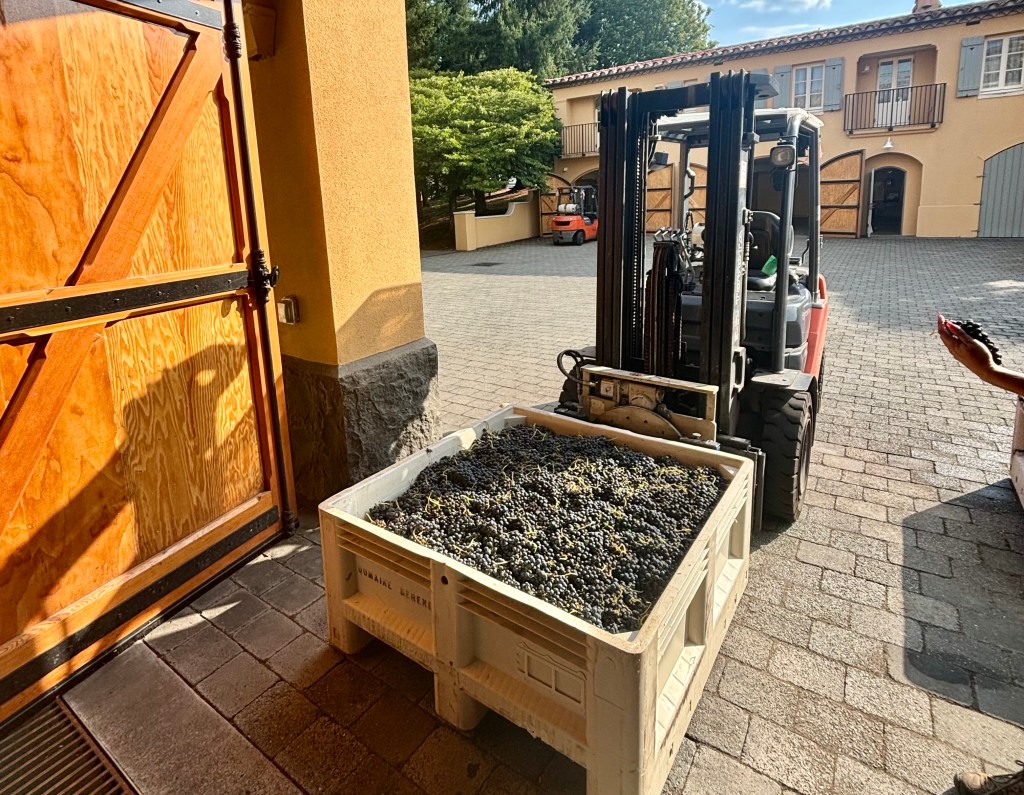

In the weeks leading up to the harvest, winemakers spend a lot of time sampling grapes from each vineyard to make sure they are picked at peak ripeness. Once it’s go-time, the fruit is harvested and brought to the winery for processing. When the grapes arrive, they are sorted to remove underripe and overripe fruit, leaves and twigs, and bugs (gross, but true). The grape clusters are then run through a destemmer to remove the stems.
fermentation

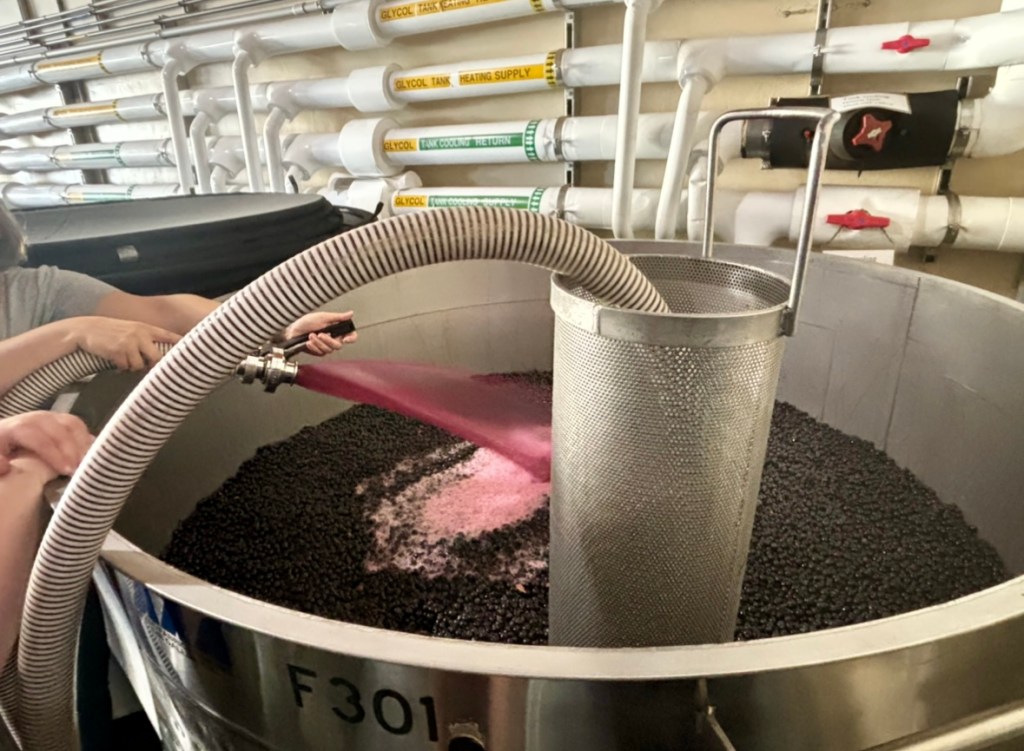
Next, the grapes are placed in tanks, usually stainless steel, to begin fermentation. Yeast is added which eats the sugars in the grapes and produces alcohol. This stage of fermentation typically lasts about 10-12 days. During this time, winery workers make sure everything stays well mixed by performing punch downs and pump overs.
Punch downs & pump overs

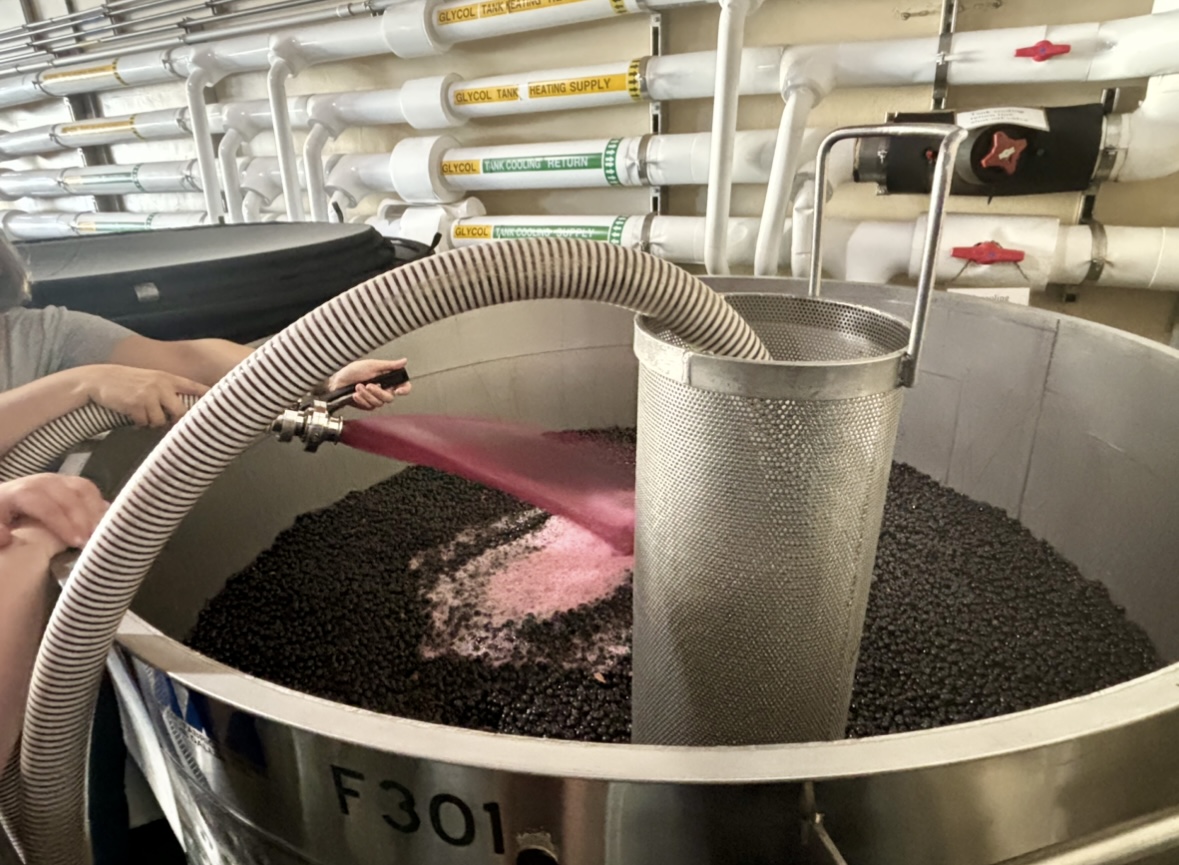

A punch down is exactly what it sounds like: using a manual (pictured top left) or pneumatic tool, the grapes floating at the top of the tank are pushed back down into the juice. A pump over involves pumping juice from the bottom of the tank and spraying it over the top (other two images). Both methods help keep the fermentation balanced and evenly extracted.
pressing
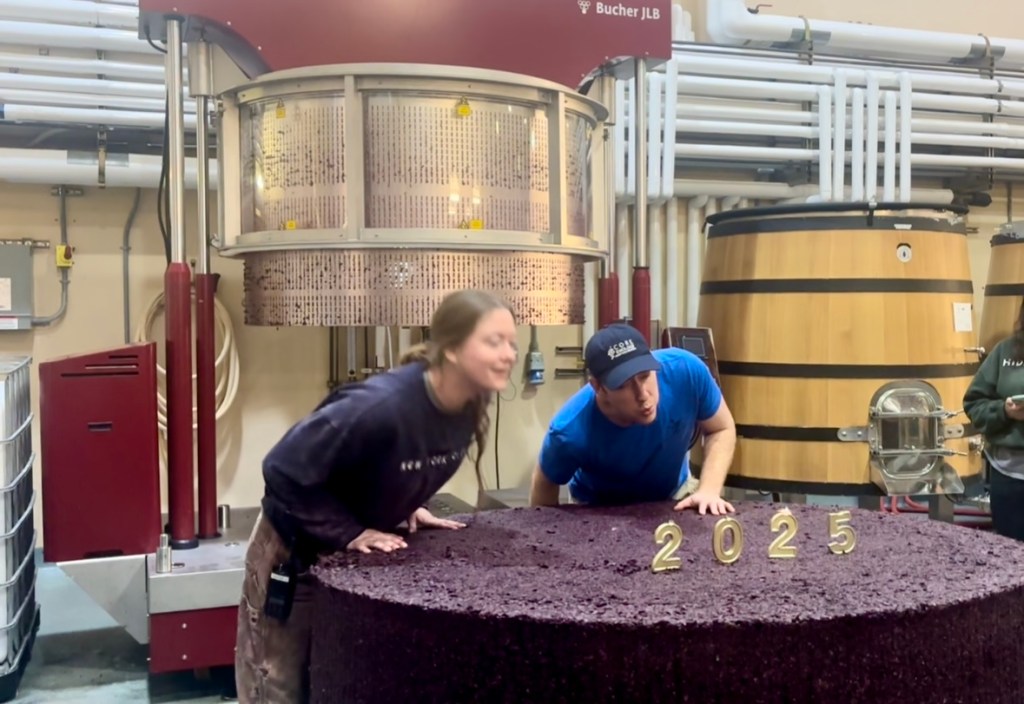
After about 10 days, the liquid wine is drained from the tank, and the remaining grape skins are collected and pressed. Pressing extracts any remaining juice, which is then added back to the rest of the wine. Fun fact: all grape juice is clear, so fermenting red grapes with their skins is what gives red wine its color, also called maceration.
White grapes, on the other hand, are pressed immediately after harvest—often without being destemmed. Whole clusters go straight into the press, and only the juice ferments in tanks before heading to barrel.
Blending/filtering
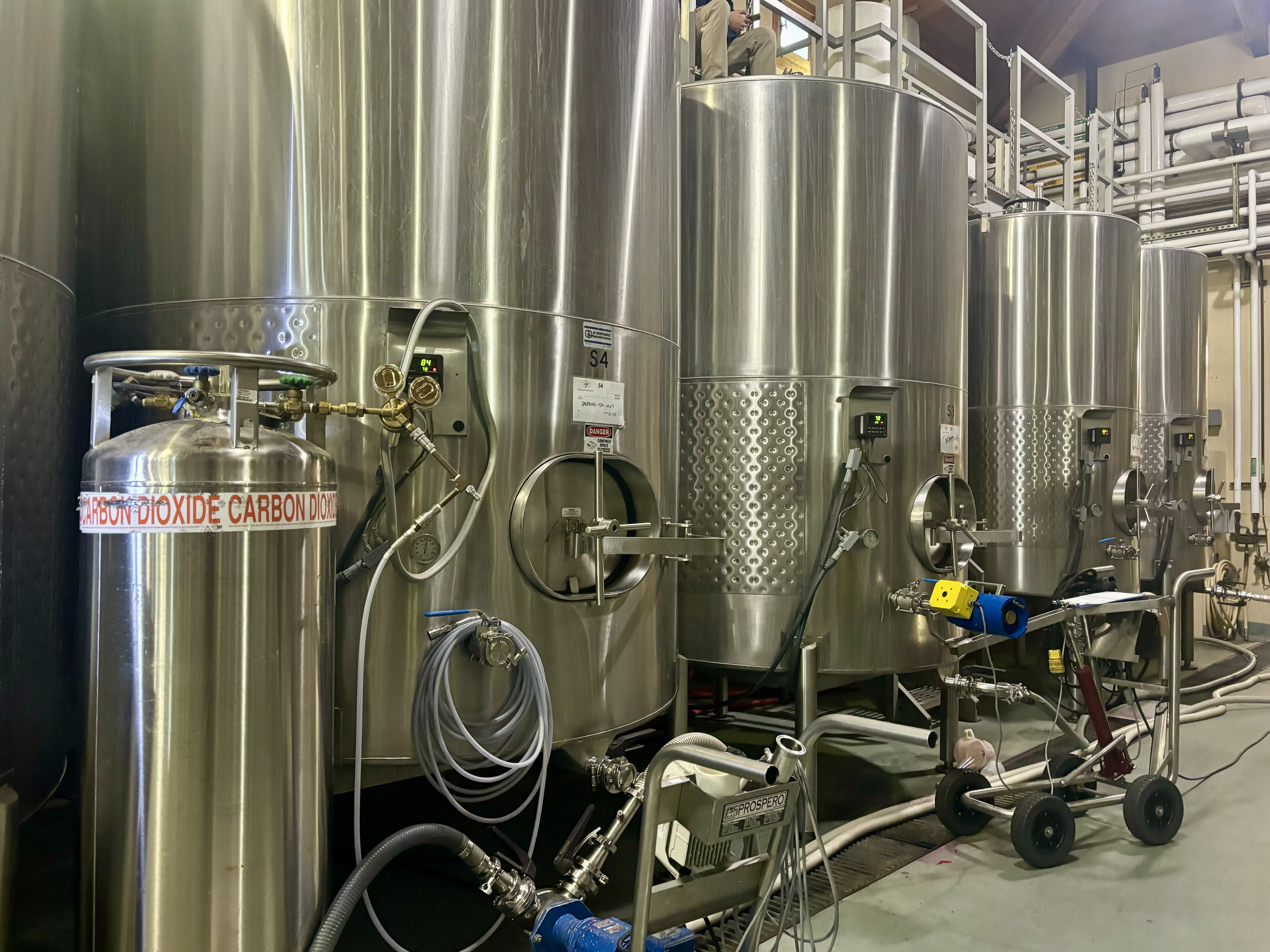

At this stage, the wine is almost ready for barrels. First, it needs to be filtered, which we did through a process called racking. This involves emptying a tank of wine and then using a racking tool to remove the remaining liquid while leaving behind the yeast particles (called lees). Winemakers may also make additions at this point, such as acid or yeast nutrients. Wines from different fermentation tanks may be blended together before going into barrel, depending on the desired final style.
barrel fermentation

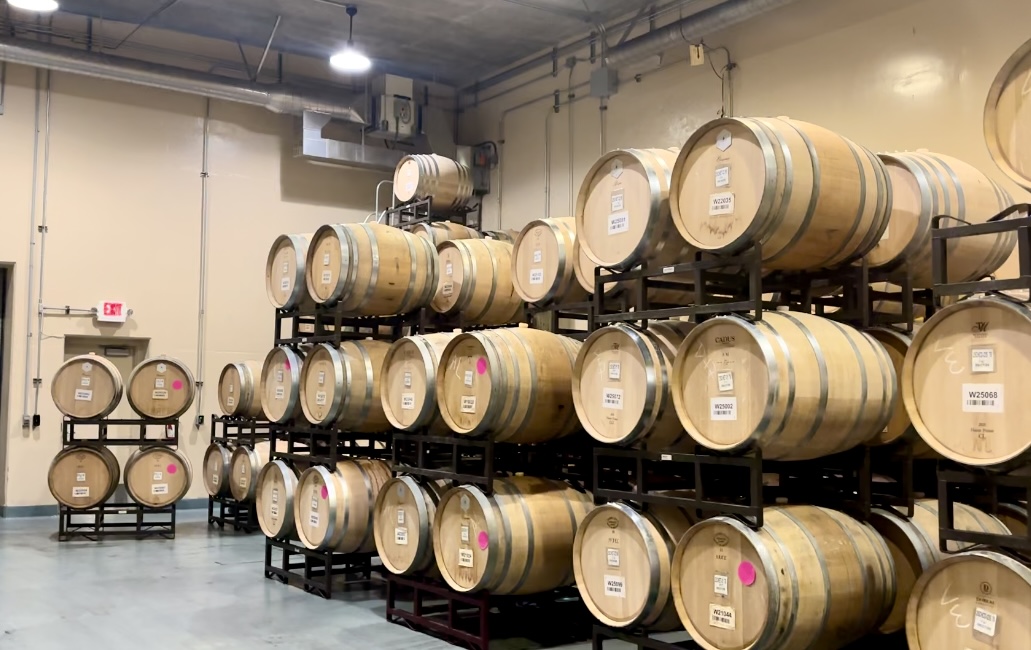
The final step is barrel fermentation and aging. Most wines, both red and white, spend time in barrels to develop tannin, flavor, and structure. A large part of winery work throughout the year revolves around monitoring barrels: topping, sampling, cleaning, and more (read more about these things here). Wines can sit in barrel anywhere from six months to two years (or longer!) before being bottled.
This is the general process of how wine is made, though every winemaker has their own techniques! If you want to learn more, I highly recommend visiting a winery (or several) in person, and asking for a cellar tour. It’s truly amazing how much work goes into each bottle.
Consider this your reminder to keep drinking wine and support your local wineries!!! 🍷
Thanks for reading 🙂
 Caffeine & Chianti
Leave a comment